
Crypto promised freedom.
Then speculation consumed the signal.
In this solo episode, I explain why I walked away from “corporate crypto” interviews and why The Lost Message became necessary to write. This is not about price charts, tribalism, or recycled narratives. It is about what the original ideas behind Bitcoin, decentralization, sovereignty, and digital ownership were actually trying to protect — and what may have been lost as the industry scaled into performance, marketing, and financialization.
This episode explores:
- how crypto drifted from freedom toward speculation
- why systems increasingly optimize humans instead of serving them
- the emotional cost of living inside accelerated digital environments
- why preserving human signal still matters
- and why builders, not PR narratives, continue to matter most
This is not investment advice.
This is a systems conversation.
Hosted by Jamil Hasan.
Crypto Hipster Podcast — where builders talk freedom, not price.
[00:00:04] The older I get, the less interested I am in hype cycles. Not because technology stopped mattering, but because people matter more.
[00:00:19] And somewhere along the way, I think large parts of the digital economy forgot that. Over the last eight years, I've conducted hundreds of conversations with founders, builders, technologists, entrepreneurs, and people trying to build entirely new systems from the ground up.
[00:00:40] Some of them were brilliant. Some failed. Some disappeared. Some became wealthier than they ever imagined. Some burned themselves out, chasing visibility inside ecosystems that, I don't know, increasingly rewarded performance more than substance.
[00:01:03] But underneath all these conversations, I started slowly noticing something else. A drift. Not just technological drift. Philosophical drift. Emotional drift. Civilizational drift.
[00:01:24] Because the original energy that pulled money and many people into crypto, decentralization, digital ownership, open systems, and programmable trust.
[00:01:45] Well, that was never just about getting rich. At least, not for everybody. For many people, it was about freedom. I know it was for me. It was about sovereignty. About ownership.
[00:02:07] It was about escaping systems that increasingly felt manipulative, extractive, performative, opaque, centralized, and emotionally exhausting.
[00:02:26] It felt human, messy, idealistic, hopeful, unfinished. Maybe that unfinished quality was precisely what made it beautiful.
[00:02:56] Now, because people were still asking difficult questions. What should ownership mean online? What should privacy mean? What should identity mean? Who controls money? Who controls access?
[00:03:28] Who controls speech? Who controls truth? Who decides legitimacy once existence becomes machine-readable? Those are important questions. They still matter. They still matter.
[00:03:56] But over time, since I've been here in 2017, something changed. First, it was slow. Then, all at once. It might have been corporate capture. It might have been something else. The language changed. The incentives changed. The atmosphere completely changed.
[00:04:26] Entire ecosystem started optimizing around attention instead of understanding. Visibility instead of wisdom. Engagement theater instead of trust.
[00:04:54] Scale instead of meaning. Eventually, many people stopped talking about building better systems for human beings and started talking about human beings. You, me, people. And they started talking about extraction instead. Narrative positioning. Market capture. Token velocity.
[00:05:23] What does your token do? Instead of what do you do? Engagement funnels. Growth metrics. Fundraising optics. You name it. Personal brands. Algorithms. Algorithms. Does it meet the requirement of the algo? Is the algo going to like it? Optimization. Optimization.
[00:05:52] Always, always optimization. You know. Optimized labor. Optimized communication. Optimized productivity. Identity. Trust. Optimized attention. Optimized learning. Everybody learns the same way. Optimize it. Optimized behavior. What's it like to be in the optimal relationship? Optimizing relationships.
[00:06:22] And then, I don't know, optimizing you and me being alive. Existence itself. And somewhere beneath the whole thing, I think many of us quietly began feeling exhausted without really understanding why.
[00:06:49] Because we were not designed to live in permanent, you know, inside systems that are all the time measuring, interpreting, predicting, ranking, quantifying, monetizing.
[00:07:19] And I would say manipulating us. At scale. Especially not systems that are operating faster than our abilities to adapt to them. You know, acceleration is a big deal. It matters. And I think about it a lot.
[00:07:48] Acceleration without orientation. You know, technological capability and human wisdom do not evolve at the same speed.
[00:08:02] Maybe one of the defining tensions, I'd say right now in our era is that civilization possesses the ability to engineer systems that we as people and as humanity no longer understand.
[00:08:25] And not merely technologically, but like philosophically. Our AI. Digital identity. Programmable ownership. Trusting machines that are readable. Machine readable trust.
[00:08:54] Governance that's dictated by an algorithm. Synthetic media. Synthetic media. That's. Shows you clips without context. Predicting behaviors. Like. All of these things are happening at the same time. And they're converging at the same time.
[00:09:23] And underneath that convergence. Are questions that we can't answer still. Like. What defines. Who we are. Openticity. Right. What defines. Legitimate identity. What defines trustworthy ownership.
[00:09:58] Who defines sovereignty. Who defines. Personhood. Once like digital representation becomes. Detached from the physical world. You know. You know. Person. Personhood. Like. That's not science fiction anymore.
[00:10:28] Like that's real. That's. Those are operational questions now. Not. Hypotheticals. And so that realization. Changed the way that I started viewing almost everything surrounding technology. Crypto. Online culture. My reason for being here. Because. Increasingly.
[00:10:55] Many platforms no longer simply organize data. Organize communication. Provide you information. They shape your. They shape our. I don't know. Reality. And the way we think and feel and act. Right. They influence. They influence. Perception.
[00:11:25] Attention. Status. Identity. Meaning. Fear. And once systems begin to shape our emotions.
[00:11:56] At scale. Across the board for everyone. Then civilization. Changes. Completely. Completely. Right. And I think many people feel that now. Even if they can't articulate it. We are more connected than ever. That is true. You. You know.
[00:12:26] I see loneliness everywhere. We have unlimited access to information. Yet. People feel. Disoriented. We have greater visibility. Than ever before. Yet. Many of us feel. Unseen. Unheard.
[00:12:56] And unwanted. We. Are building the systems. Promising empowerment. Yet. Many people. Feel. Trapped. I don't say that as somebody standing outside the machine pretending moral superiority. Anything. I'm inside it too. Okay. I spent years online.
[00:13:26] Years building. Years publishing. 403 books. Another one coming. I've been. Trying to preserve signals. Underneath all the noise. And. Years. Watching systems. Shape people. And the truth is. Technology is not evil.
[00:13:56] Contrary to. A lot of people's public comments. Which I call. Noise. Most systems. Create liberating and exploitative. Possibilities. With. Ambiguity. That defines our online lives. Now. The same systems that allow. Independent creators to build audiences.
[00:14:26] Without institutional gatekeepers. Crypto Hipster Podcast. For example. A lot of the ones. But they create algorithmic pressures that incentivize performance over authenticity. I prefer authenticity. The same systems that democratize communication also accelerate outrage. Tribalism. Manipulation.
[00:14:56] And. Performative. Identity culture. Now. The same systems that increase accessibility. The same systems that increase accessibility. Also increase surveillance. The same systems that create freedom. Also create dependency. Now. That's tension. That's tension. And that tension is real. And.
[00:15:25] Ignoring that tension is dangerous. Because. Civilization. Increasingly treats technological process. Process. And processes. And progress. And progress. As synonymous with human progress. It's not. Those are not the same thing. So. People flourishing cannot be reduced entirely to. �리. Methodhts to metrics. To optimization.
[00:15:55] Now. Calves. Not everything meaningful scales clearly. Cleanly. Yeah. And not everything creation인데요. And not enfin, in alternately.
[00:16:16] Maybe parts of maturity and maturing is recognizing that preserving humanity sometimes requires resisting systems constantly that are encouraging us to become more efficient versions of ourselves while disconnecting us from the deeper emotions we have in relationships with grounding our lives that are needed.
[00:16:44] You know, being present, being part of our community, memory, coming up with meaning and embodiment, just living our ordinary lives. Those anchors are most important and they matter the older that I become.
[00:17:09] I see it because despite all the technological acceleration, much of what makes life meaningful still moves at regular normal speed.
[00:17:25] You know, love, trust, healing, grief, forgiveness, children growing up and watching them grow up slowly.
[00:17:51] And no amount of optimization replaces that. So that realization is partly why I stopped wanting to interview polished corporate crypto personalities. Reading prepared talking points and being polished before they come onto my show.
[00:18:17] I am interested in speaking to actual builders who wrestle with honesty, with uncertainty, and who solve hard problems.
[00:18:34] People who are confronting trade-offs directly instead of hiding behind branding language, which is the first to hit my editing floor. The smart executives know how to use finance.
[00:18:57] The smart executives know how to use finance, leadership, risk, and shill their book all in the same sentence. I sift through that shill part. You know, because authenticity online is rare. And rarity creates value. And it creates emotional value. Which is much more important than monetary value.
[00:19:27] So, I became one of the deeper reasons why I write books. Why I continue to write books. I will always write books. But I change my books. Be more reflective in synthesis. Instead of just documenting conversations. And, you know, I wasn't merely documenting technology in my books, right? I was documenting emotional transition.
[00:19:53] Civilizational and psychological and emotional and mental transition. Personal transition. And what it felt like to live through a period where humanity itself gradually became digitally reconstructed. In real time. That time period of 2017 to 2025.
[00:20:18] It's a massive inflection point in not only technology, but in humanity. And maybe reconstruction eventually changes us to be more than technology. So, I don't think we fully understand yet what constant digital meditation. No, mediation.
[00:20:47] Mediation? Meditation. Mediation. Is doing to us. To our identity. To trust. To memory. To development. To all that stuff. To our relationships with other people. I genuinely don't. But I think that future generations will study this era. Well, I just mentioned 2017 to 2025 differently than we currently experience it. Because most times in history things get collapsed.
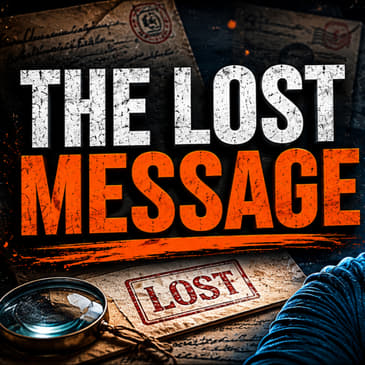
[00:21:17] I'm here to make sure it doesn't. So, it's a turning point. I believe it's a philosophical turning point in how we understand ourselves. Which brings me back to the title of my second book. But my second book in my new way I'm doing books. It's called The Lost Message.
[00:21:41] Because somewhere along the line, underneath all the speculation and the tribalism and the monetization and the branding and the endless engagement loops and the performance layers, all that crap. We still feel that something important was lost. Not just inside crypto. But like inside culture.
[00:22:09] Like a sense of groundedness. Continuity. Humanity. So, a sense these systems existed to serve us. Whether than we serve it. And maybe part of my responsibility now is learning to preserve humanity while living inside this environment. And us. All of us.
[00:22:40] Instead of incentivizing fragmentation and acceleration and performance. And prediction and abstraction. To preserve humanity instead. That might be the real challenge. Right? So, not merely building more advanced systems. But remaining people. Remaining human. While doing it.
[00:23:12] Now, I don't know where all this goes, honestly. I really don't. I don't know. Where we become once AI and programmable systems and digital identity infrastructure and machine existence converges. I don't know. None of us do. But I know that the older I become, the less interested I am in systems pretending certainty.
[00:23:43] The more interested I am in people willing to wrestle honestly with complexity. Maybe. Maybe. Maybe preserving humanity begins there. But I'm not pretending I have all the answers. Or we have all the answers. I certainly probably don't have any answers. I might have some. But we don't. Collectively. Yet.
[00:24:12] But are refusing to surrender. Here. This is the crypto hipster where builders talk freedom and not price. Thanks for tuning in. Thanks for tuning in.